
- Servitudes included taking timber, collecting brushwood and grazing on someone else's land.
- Article 11 of the emancipation decree of 1864 preserved certain peasant rights despite changes in ownership relations.
- The 1920 act provided for extinguishing servitudes in return for compensation. Today's utility easements have a separate legal basis.
Timber to repair a house, brushwood for the stove, leaves for bedding and a place for cattle. These needs appear in the decree emancipating peasants in the Kingdom of Poland of 2 March 1864. They brought tangible benefits to a farm: access to fuel and pasture meant using resources that did not have to be bought. These rights over someone else's land were called servitudes.
The emancipation reform did not erase them with a single signature. Article 11 of the decree preserved rights to certain uses where they arose from registers of obligations, contracts, oral agreements or custom. Two interests therefore met in the same forest: those of the landowner and of the entitled villagers. Identifying who owned the forest did not yet answer who could use it.
What was disputed? The scope of the right: whether people could only gather brushwood or also receive building timber; where animals could graze; and which farms held the right. Not every entry into a forest was lawful, but neither was every entry an infringement of ownership. The legal basis for use and its limits became crucial. This describes how historical disputes worked, not a reconstruction of one particular lawsuit.
The problem survived into independent Poland. The act of 7 May 1920 on extinguishing servitudes in the former Congress Kingdom provided for both voluntary agreements and compulsory proceedings. Extinguished rights were to be compensated with land and forests and, in specified circumstances, money. The documentation included resolutions, the parties' agreement, a plan and a survey register. An old right was to be settled, not simply forgotten.
The act of 10 January 1922 extended the rules to specified eastern voivodeships and districts. It allowed the existence and extent of servitudes to be established through witnesses and experts where written evidence had been lost or destroyed. Extinguishment therefore depended not only on documents but also on reconstructing rights whose records had not survived.
Why does this story recall today's questions about electricity poles? In both cases, land ownership can coexist with another person's or entity's right to use it. That is where the comparison ends. Forest and grazing servitudes are not today's utility easements. An amendment in 2008 introduced a separate Civil Code institution concerning utility infrastructure. The old forest dispute helps frame questions about the limits of ownership, but does not decide a modern power-line case.
Is there a pole or line on your land? The basis for using the land, the documents and any potential claims require individual examination. PGW can receive an enquiry and establish the possible scope of assistance; an independent lawyer provides the legal assessment. Ask about a property matter.
Sources and documents
- Integrated Educational Platform, peasant emancipation in Polish lands: text of the 1864 decree, Article 11, ZPE: decree text.
- Act of 7 May 1920 on extinguishing servitudes in the former Congress Kingdom, Dz.U. 1920 No. 42 item 249, including Articles 1, 10 and 17, ELI: act of 1920.
- Act of 10 January 1922 on extinguishing servitudes in the listed voivodeships and districts, Dz.U. 1922 No. 10 item 65, Article 2, ELI: act of 1922.
- Act of 30 May 2008 amending the Civil Code and certain other acts, Dz.U. 2008 No. 116 item 731, ELI: introduction of utility easements.
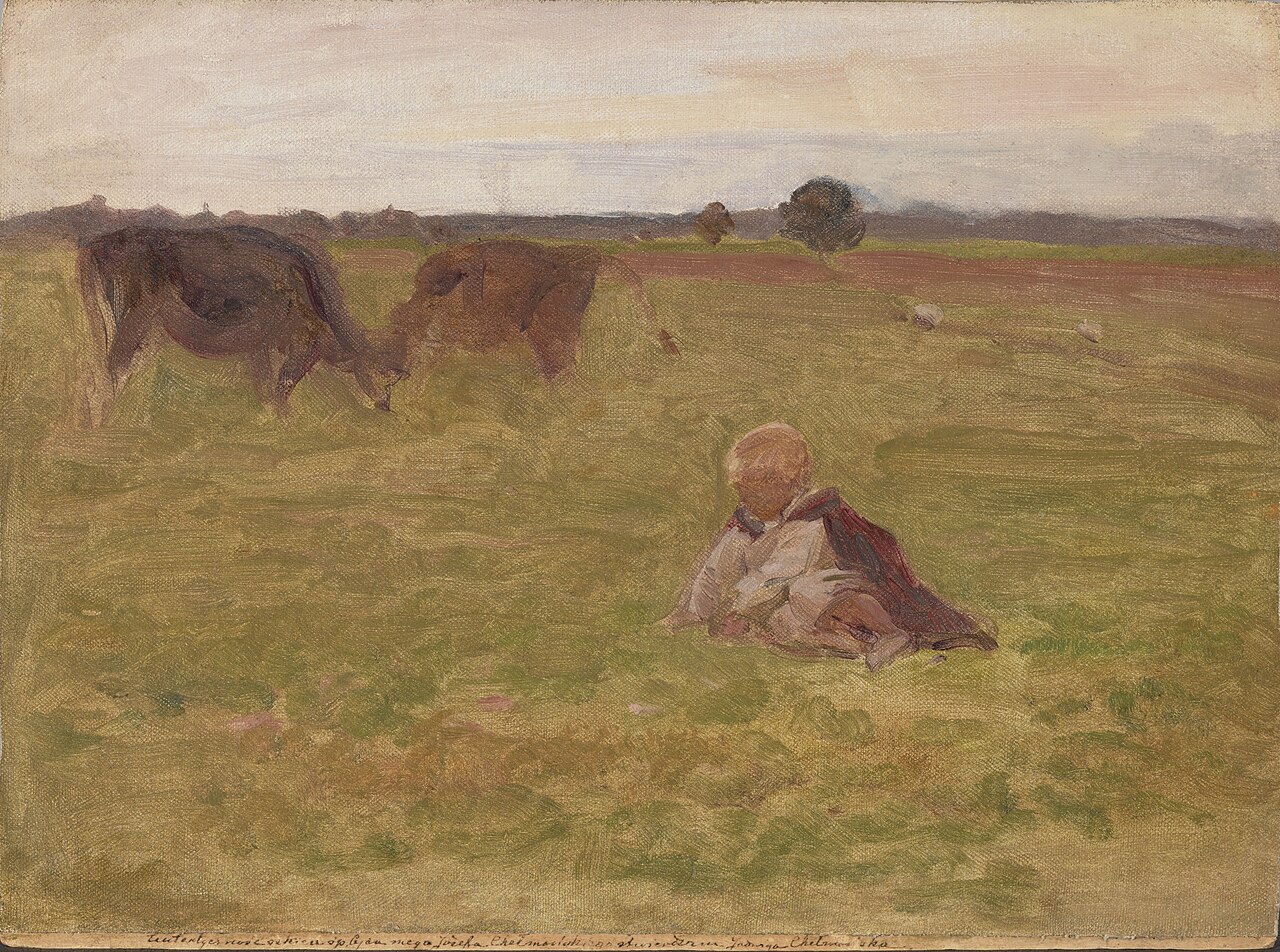
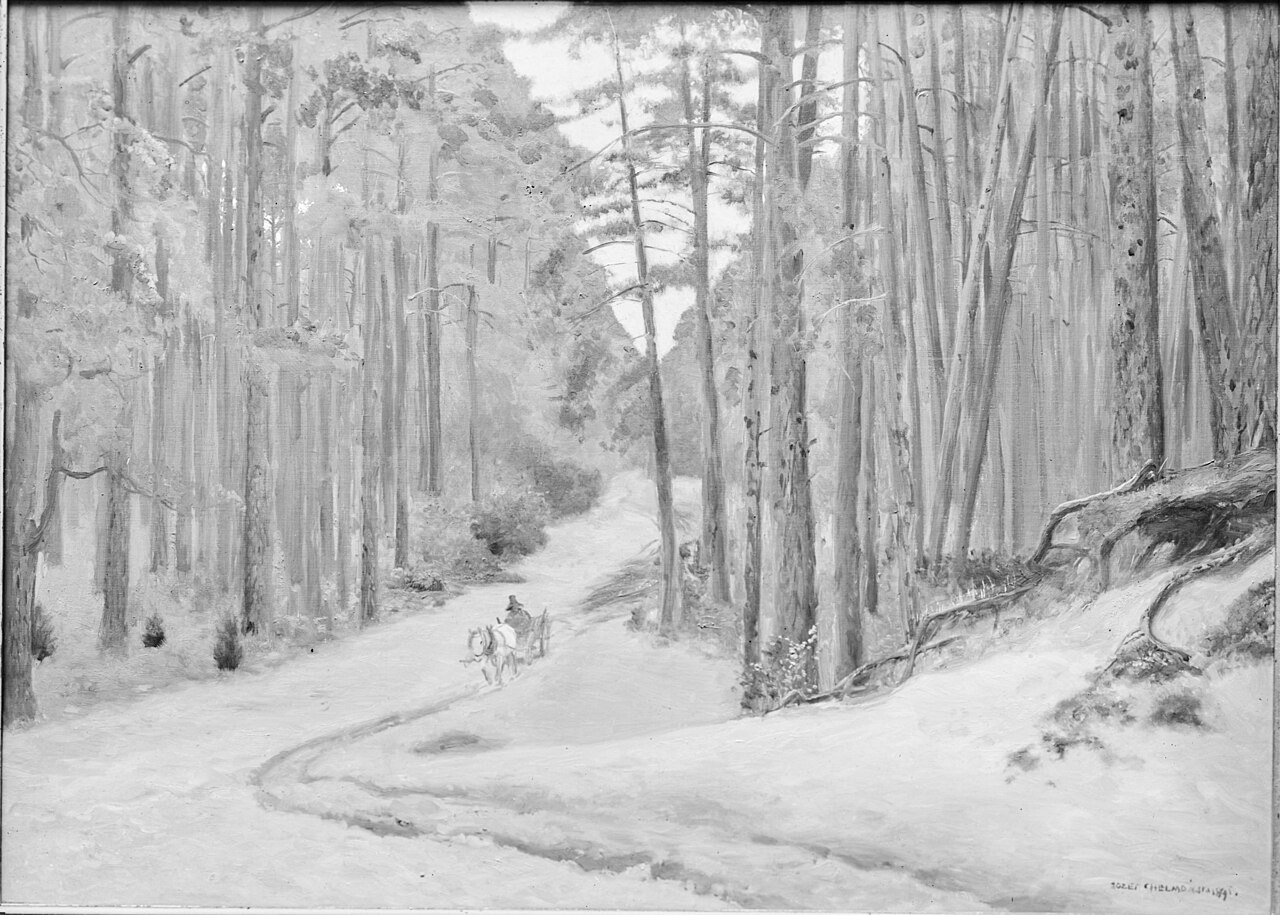
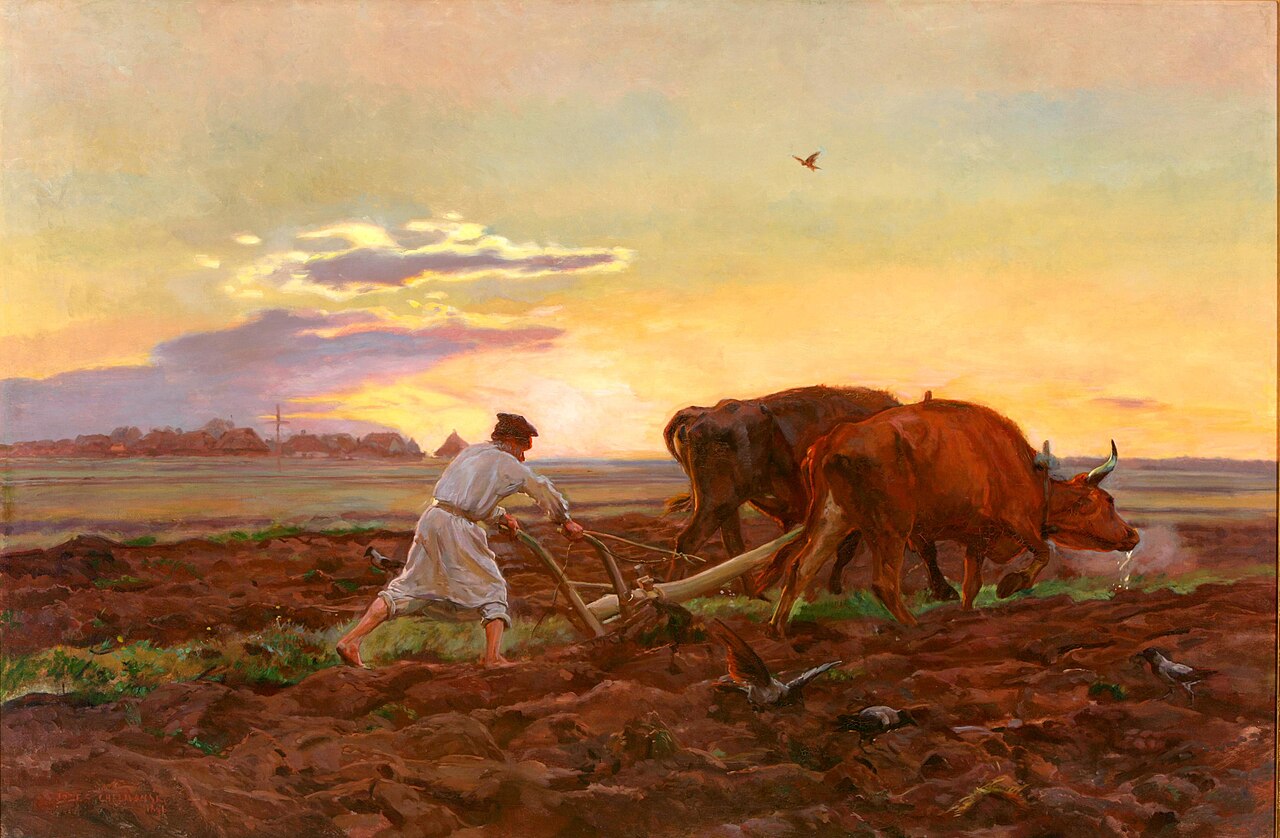
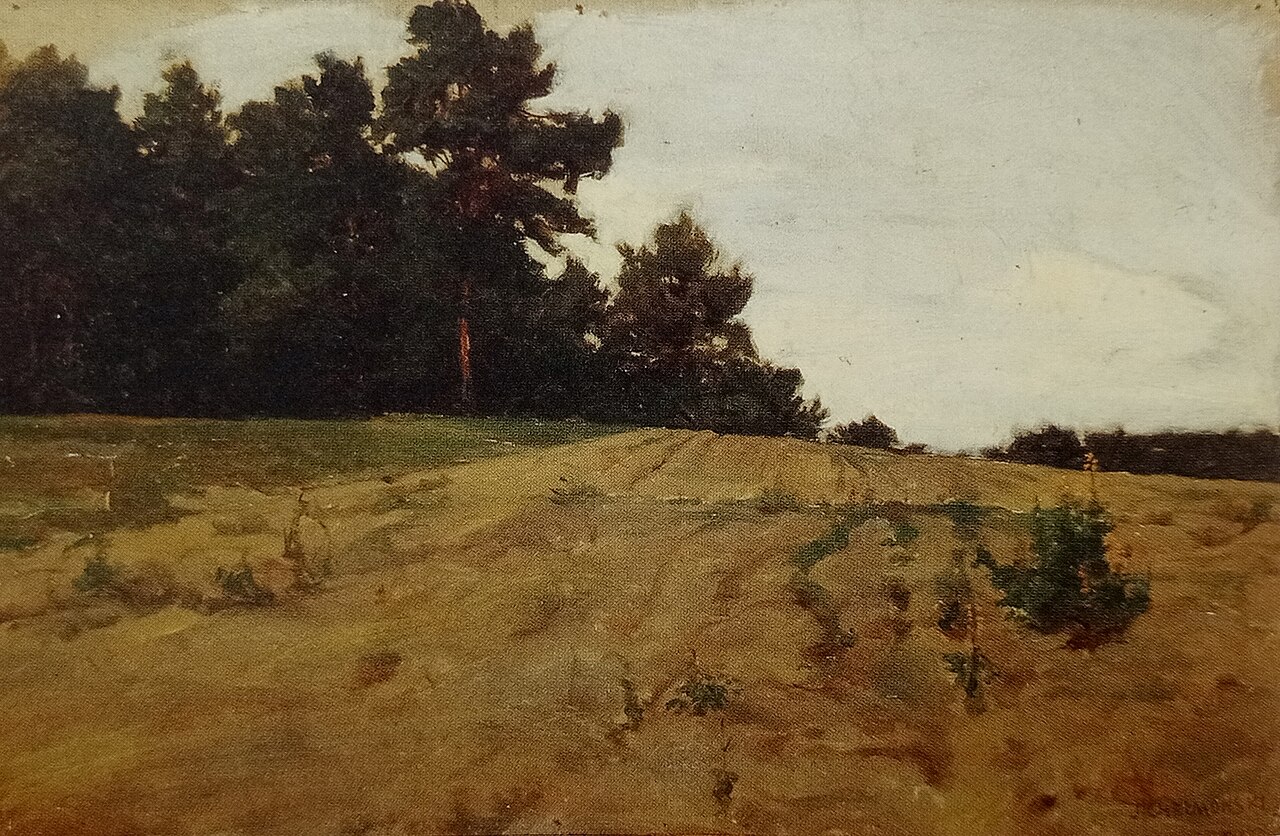
- Chełmoński's illustrations depict villages and forests of the period; they do not document a particular servitude dispute, Illustration record and provenance.
- Supplementary illustration: Józef Chełmoński, ‘Ploughing’, 1896. National Museum in Poznań. Context for the place, person or period, not a photograph of the event on the date in the title. Provenance and restrictions: Public domain, Illustration provenance.
- Supplementary illustration: Józef Chełmoński, ‘Edge of the Forest’, circa 1895–1905. Context for the place, person or period, not a photograph of the event on the date in the title. Provenance and restrictions: Public domain, Illustration provenance.
- Ilustracje: Józef Chełmoński, “Pastuszek, szkic”, c. 1897–1902. National Museum in Warsaw; Józef Chełmoński, “Droga przez las (Dukt leśny)”, 1891; Józef Chełmoński, ‘Ploughing’, 1896. National Museum in Poznań; Józef Chełmoński, ‘Edge of the Forest’, circa 1895–1905.
This article is historical and informational and does not constitute legal advice.