
- 1584: the Brotherhood of Mercy in Kraków; 1587: Bank Pobożny, a pawnbroking institution offering interest-free secured loans.
- Modelled on the Italian ‘montes pietatis’, which protected the poor from usury.
- The Archbrotherhood of Mercy still operates in Kraków today.
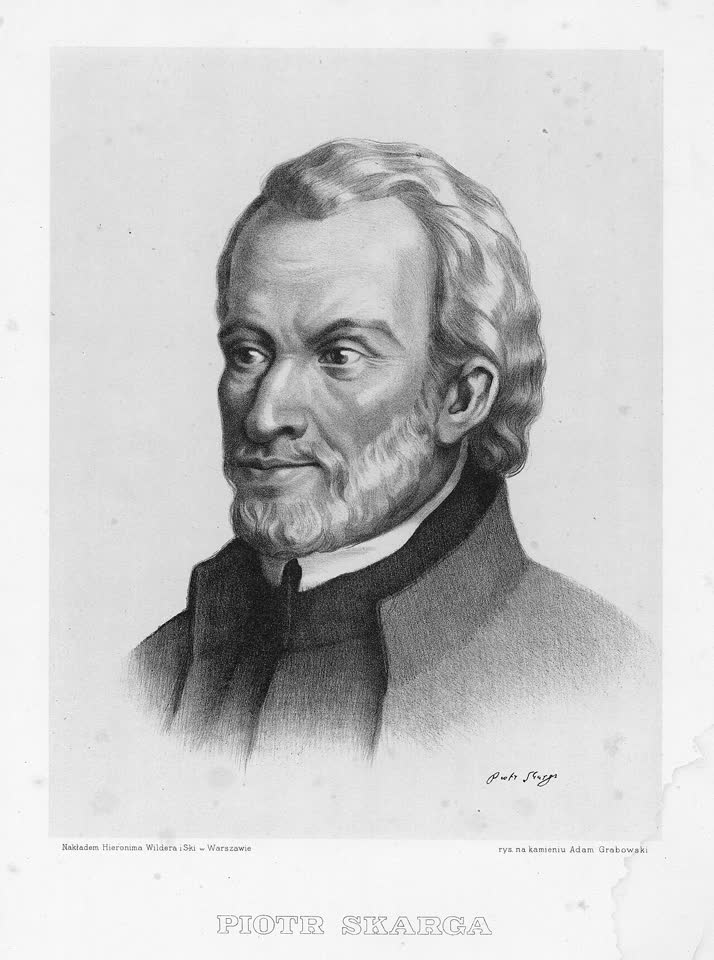
In 1584, Skarga founded the Brotherhood of Mercy in Kraków, later called the Archbrotherhood, to help the elderly, the sick, orphans and prisoners. Three years later, in 1587, the brotherhood established Bank Pobożny: a pawnbroking institution lending money against pledged items without charging interest. Alongside them came the Brotherhood of St Lazarus and St Nicholas’s Chest, which provided dowries for poor young women.
The idea came from Italy. Since the 15th century, ‘montes pietatis’, charitable banks, had operated there to free the poor from moneylenders: instead of repaying a debt with many times its value in interest, the borrower left a pledge and repaid only what they had borrowed. The idea found fertile ground in Kraków, where townspeople readily left bequests to the brotherhood, and the bank’s capital grew from generation to generation.
The Archbrotherhood of Mercy survived the partitions, wars and the Polish People’s Republic. Its Kraków treasury was restored in 2014, and the institution still carries out charitable work on Sienna Street, near the Main Market Square. An idea from four centuries ago, a loan whose cost is clear and fair, has returned to today’s law as a lender’s disclosure obligation.
In statutory cases where a lender breaches its obligations, a consumer may invoke the cost-free credit sanction. Whether it applies depends on the agreement and fulfilment of the statutory conditions. See what is worth checking in your agreement: The cost-free credit sanction at e‑PGW.
Sources and documents
- ‘The treasury of Kraków’s Archbrotherhood of Mercy restored’, dzieje.pl (PAP), 5 December 2014, dzieje.pl/node/27487.
- ‘The beatification process for Father Skarga begins in Kraków’, dzieje.pl (PAP), 8 December 2014, dzieje.pl/node/17983.
- J. Michnicka-Gajek, article on Piotr Skarga’s charitable works and the Italian origins of charitable banks, Scientific Society of the Catholic University of Lublin, ojs.tnkul.pl.
- Consumer Credit Act of 12 May 2011, Article 45, Journal of Laws 2011 No. 126, item 715, eli.gov.pl/eli/DU/2011/715.
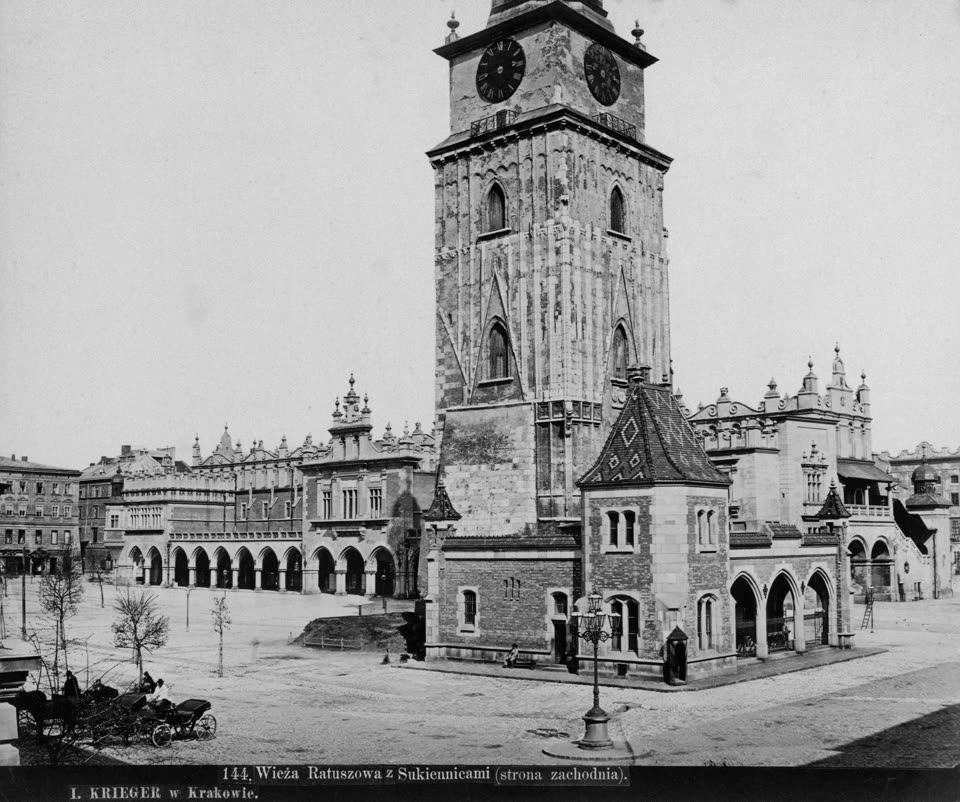
- Supplementary illustration: Kraków, Main Market Square with the Cloth Hall, 1887. Photo: Ignacy Krieger. Context for the place, person or period, not a photograph of the event on the date in the title. Provenance and restrictions: Ignacy Krieger, 1887. The record specifies PD-anon-70-EU / US-expired despite naming the creator; this inconsistency in the description has been noted., Illustration provenance.
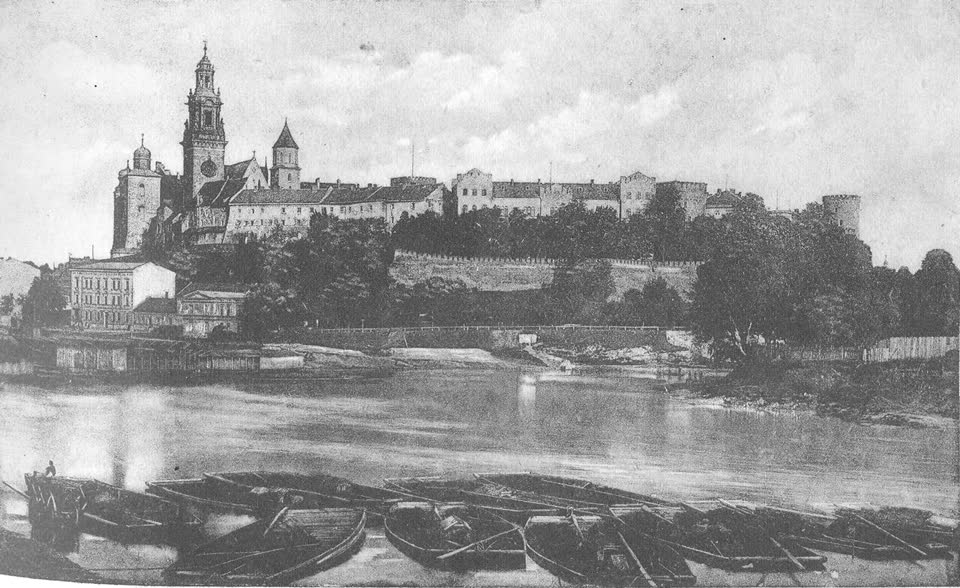
- Supplementary illustration: Kraków, Wawel viewed from the Vistula, the nineteen-thirties. Bulgarian State Archives. Context for the place, person or period, not a photograph of the event on the date in the title. Provenance and restrictions: 1930, creator unknown, Bulgarian State Archives, fonds 1771K/inventory 1/unit 1163/folio 27; PD-anon-70-EU., Illustration provenance.
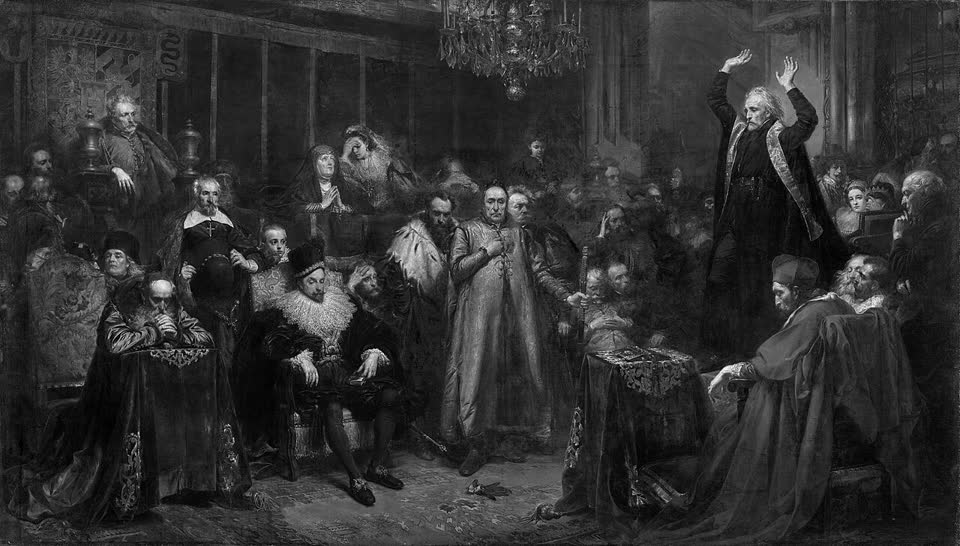
- Ilustracje: Piotr Skarga, drawing by Adam Grabowski, 1921; Jan Matejko, ‘Skarga’s Sermon’, 1864; Kraków, Main Market Square with the Cloth Hall, 1887. Photograph: Ignacy Krieger; Kraków, Wawel seen from the Vistula, 1930s. Bulgarian State Archives.
This article is historical and informational and does not constitute legal advice.