
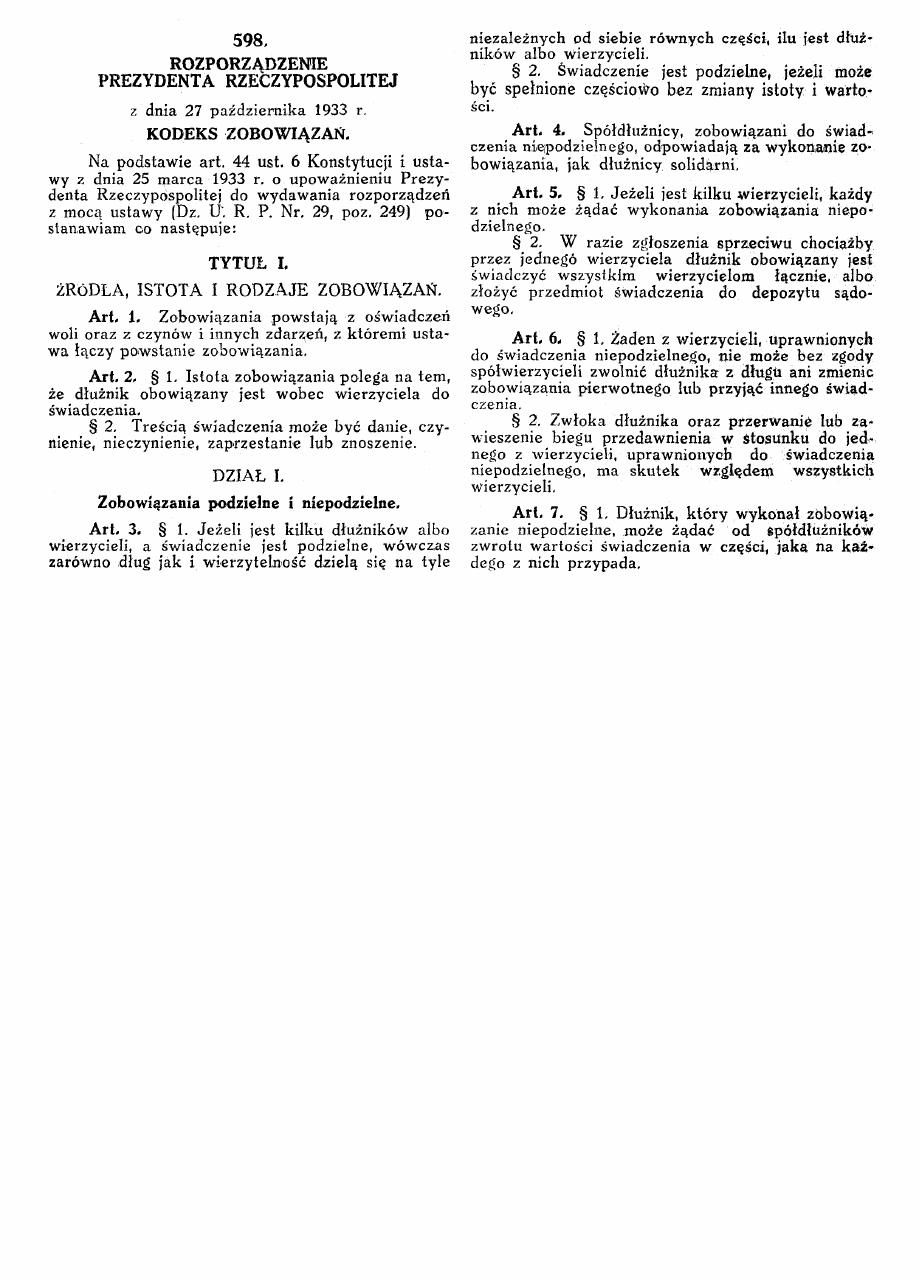
- The code was issued by a regulation of the President of Poland of 27 October 1933.
- It was published on 28 October and took effect on 1 July 1934.
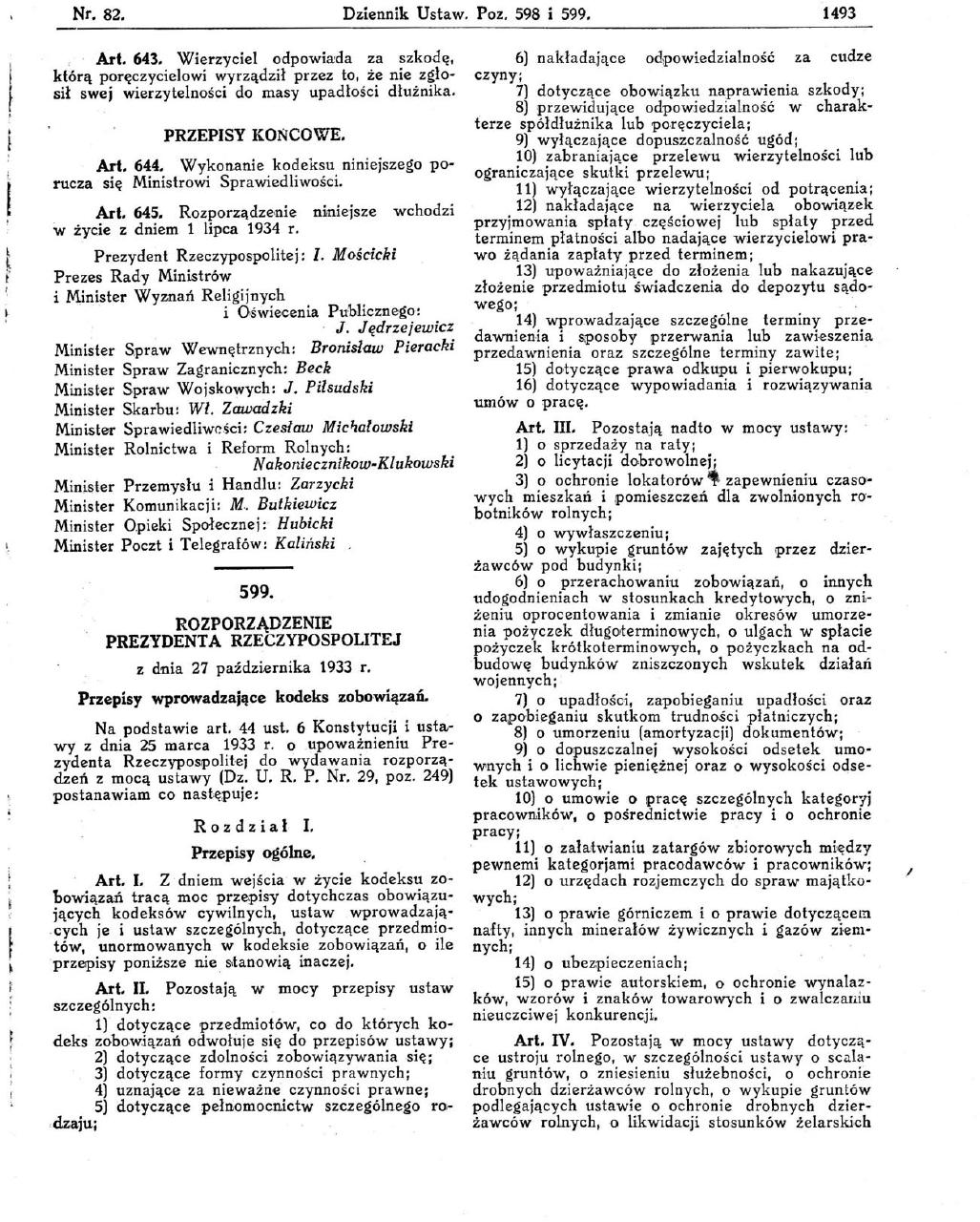
- Separate introductory provisions and exceptions for special acts accompanied it.
Two items sit side by side in the 1933 Journal of Laws No. 82: 598, the Code of Obligations, and 599, its introductory provisions. Distinguishing the documents matters. One established the rules on obligations; the other explained their relationship with existing law.
The code did not take effect on the day of signature. The official register gives 27 October 1933 as the issue date, 28 October as publication and 1 July 1934 as entry into force. The year in the story's title and the year when the rules began to apply therefore differ, although they concern the same act.
The introductory provisions replaced earlier rules within the code's scope but also preserved certain special acts. They listed insurance, bankruptcy, tenant protection and some employment matters, among others. It was therefore not a simple removal of all earlier civil law by a single regulation.
In practice, creating a shared language for creditor and debtor mattered: what gives rise to an obligation, what can be demanded and how to describe non-performance. The code's history shows that contractual order requires not only making agreements but also rules for disputes. Historical provisions must not, however, be applied directly to a modern case. Today's legal basis must be established separately.
An unpaid invoice or unperformed contract requires the documents, deadlines and basis of the claim to be established. PGW receives enquiries about recovering receivables and establishes the possible scope of support. Explore debt recovery.
Sources and documents
- Code of Obligations, Dz.U. 1933 No. 82 item 598: act and dates in the ELI register, Code of Obligations, Dz.U. 1933 No. 82 item 598: act and dates in the ELI register.
- Provisions introducing the Code of Obligations, item 599, particularly Articles I–III, Provisions introducing the Code of Obligations, item 599, particularly Articles I–III.
- Kórnik Library of the Polish Academy of Sciences: contemporary edition record stating entry into force on 1 July 1934, Kórnik Library of the Polish Academy of Sciences: contemporary edition record stating entry into force on 1 July 1934.
- Illustration: Code of Obligations, Journal of Laws of 1933, No. 82, item 598. Reproduction of an official document. Attribution: President of the Republic, official act. The first page of the official PDF was rendered as JPEG with its longer side at 1280 px. No cropping or other changes., ELI: original document.
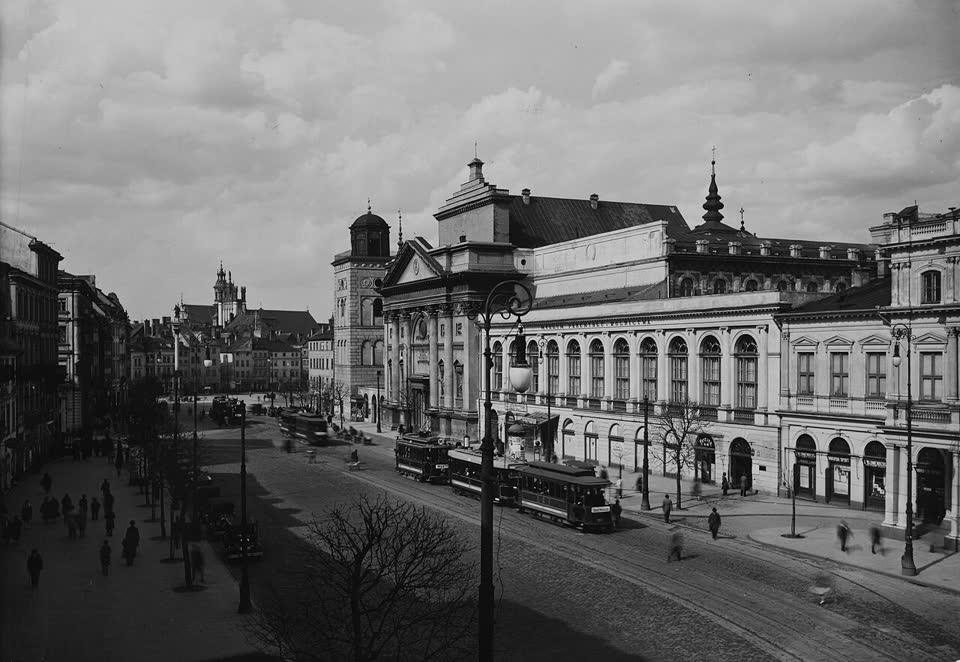
- Illustration: Henryk Poddębski, Krakowskie Przedmieście in Warsaw, the 1930s. National Library. Period context, not a scene of the code's signing. Attribution: Henryk Poddębski, National Library. The existing illustration file from PGW's provenance register was used, with no new changes to the file in this release., Illustration record and provenance.
- Illustration rights (Henryk Poddębski, Warsaw, the 1930s. National Library.): Public domain according to the existing provenance register., Rights information.
- Illustration: Provisions introducing the Code of Obligations, 1933. Journal of Laws No. 82, item 599. Authorship: the authority issuing the act, as stated in the publication. The complete first page of the published text, rendered from the official PDF without removing content. Rights: official material; do not claim a CC licence., Illustration provenance.
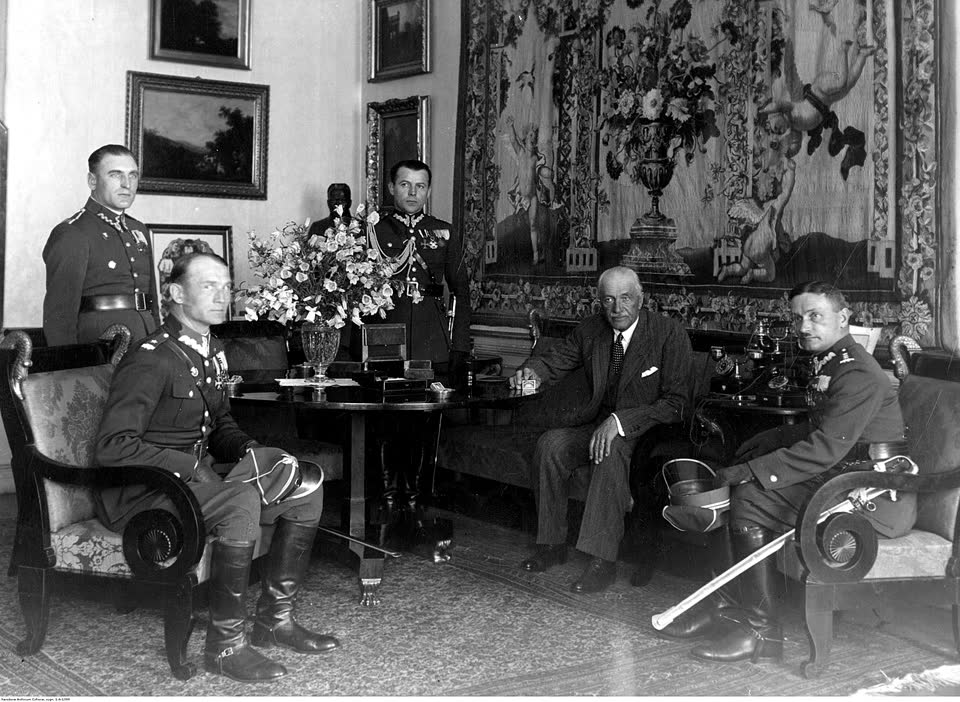
- Supplementary illustration: President Ignacy Mościcki during an audience, May 1934. National Digital Archives. Context for the place, person or period, not a photograph of the event on the date in the title. Provenance and restrictions: 11 May 1934; reference 3/1/0/2/1399. Commons: PD-Polish, creator unknown. The official NAC index confirms the date and reference; the conditions of first publication without a copyright reservation have not been independently established., Illustration provenance.
- Ilustracje: Code of Obligations, 1933. Journal of Laws No. 82, item 598; Henryk Poddębski, Warsaw, the 1930s. National Library; Provisions introducing the Code of Obligations, 1933. Journal of Laws No. 82, item 599; President Ignacy Mościcki during an audience, May 1934. National Digital Archives.
This article is historical and informational and does not constitute legal advice.