
- The ceremonial opening of the Merchants' Exchange in Saxon Palace took place on 12 May 1817.
- The act establishing the exchange dated from 12 April 1817.
- The Merchants' Exchange is not the same institution as today's GPW company established in 1991.
The beginning has several dates. The viceroy's decision establishing the exchange was issued on 12 April 1817. The ceremonial opening took place a month later at Saxon Palace. Market historian Mieczysław Puławski distinguishes the ceremony from the operational start, which he dates to 16 May. The opening date should therefore not be presented as the supposed date when the act was signed.
The name Merchants' Exchange reflects the community from which the institution grew. Exchange bulletins announced rates for bills of exchange and foreign currencies and prices of goods. Publishing a price must, however, be distinguished from an actual transaction on the trading floor. Puławski notes that some commodity prices came from off-exchange trading, while the actual activity was primarily monetary.
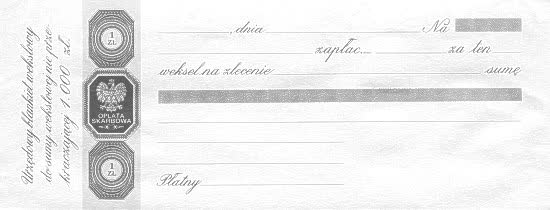
Sworn brokers acted as intermediaries. Their work required knowledge of trade, coins and payment documents. Bills of exchange mattered because commerce was not limited to immediate cash payments. Obligations and expectations of future payment were also traded.
This account does not demonstrate one company's uninterrupted operation from 1817 to the present. Today's GPW was established in 1991 and held its first session on 16 April. The historical tradition of Warsaw's market is older than the current company. Distinguishing these histories lets us appreciate continuity of the idea without inventing organisational continuity.
A bill of exchange, an invoice and a contract are different documents, so a modern case needs individual examination. PGW receives receivables enquiries; the scope of help is agreed on the basis of specific records. Ask about a receivables matter.
Sources and documents
- Mieczysław Puławski, Dwieście lat minęło. Krótkie opisanie dziejów giełd papierów wartościowych w Polsce, 2017, pp. 170–171: dates and operation of the Merchants' Exchange; historical regulations cited, Mieczysław Puławski, Dwieście lat minęło. Krótkie opisanie dziejów giełd papierów wartościowych w Polsce, 2017, pp. 170–171: dates and operation of the Merchants' Exchange; historical regulations cited.
- Integrated Educational Platform: exchanges and insurance, the opening in 1817 and establishment of GPW in 1991, Integrated Educational Platform: exchanges and insurance, the opening in 1817 and establishment of GPW in 1991.
- Centre for Education Development: securities exchange, the tradition of trading bills of exchange and bonds, Centre for Education Development: securities exchange, the tradition of trading bills of exchange and bonds.
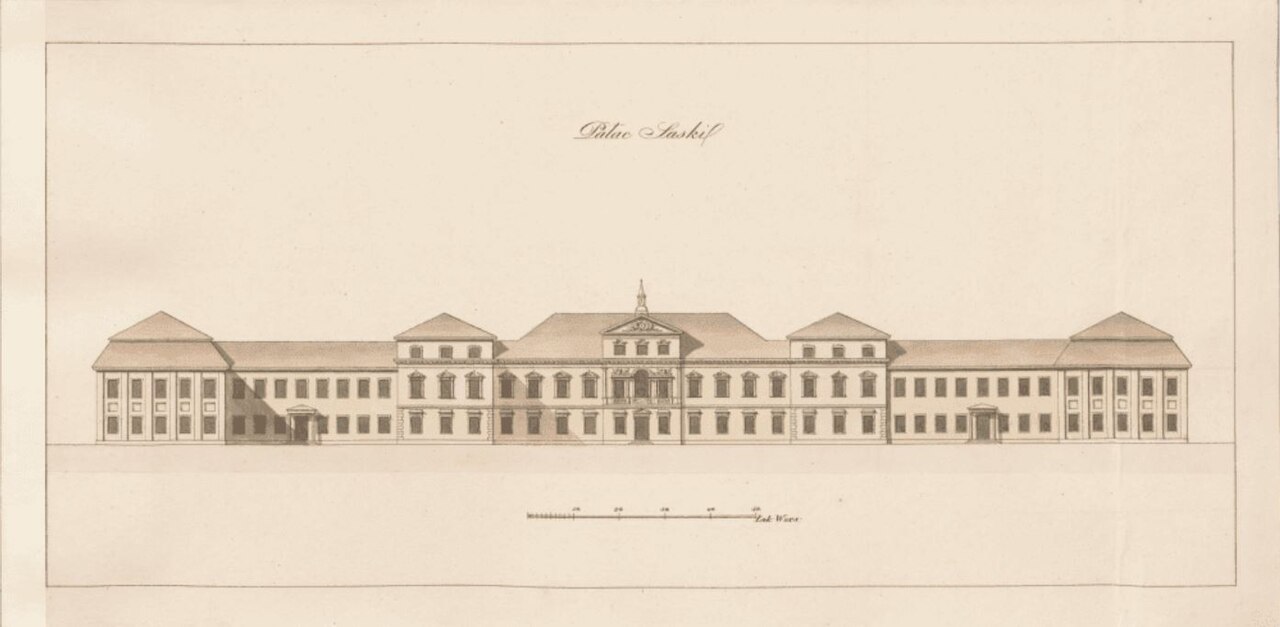
- Illustration: Saxon Palace, entrance view around 1800, unknown artist. An image of the building before the exchange opened, not a record of the ceremony in 1817. Attribution: unknown artist, architectural view; source discoversaskipalace.com/m/2. Proportionally reduced thumbnail supplied by Wikimedia Commons. No additional cropping, retouching or colour changes to the file., Illustration record and provenance.
- Illustration rights (Saxon Palace, unknown artist, around 1800.): Public domain, PD-old/PDM according to the Commons record., Rights information.
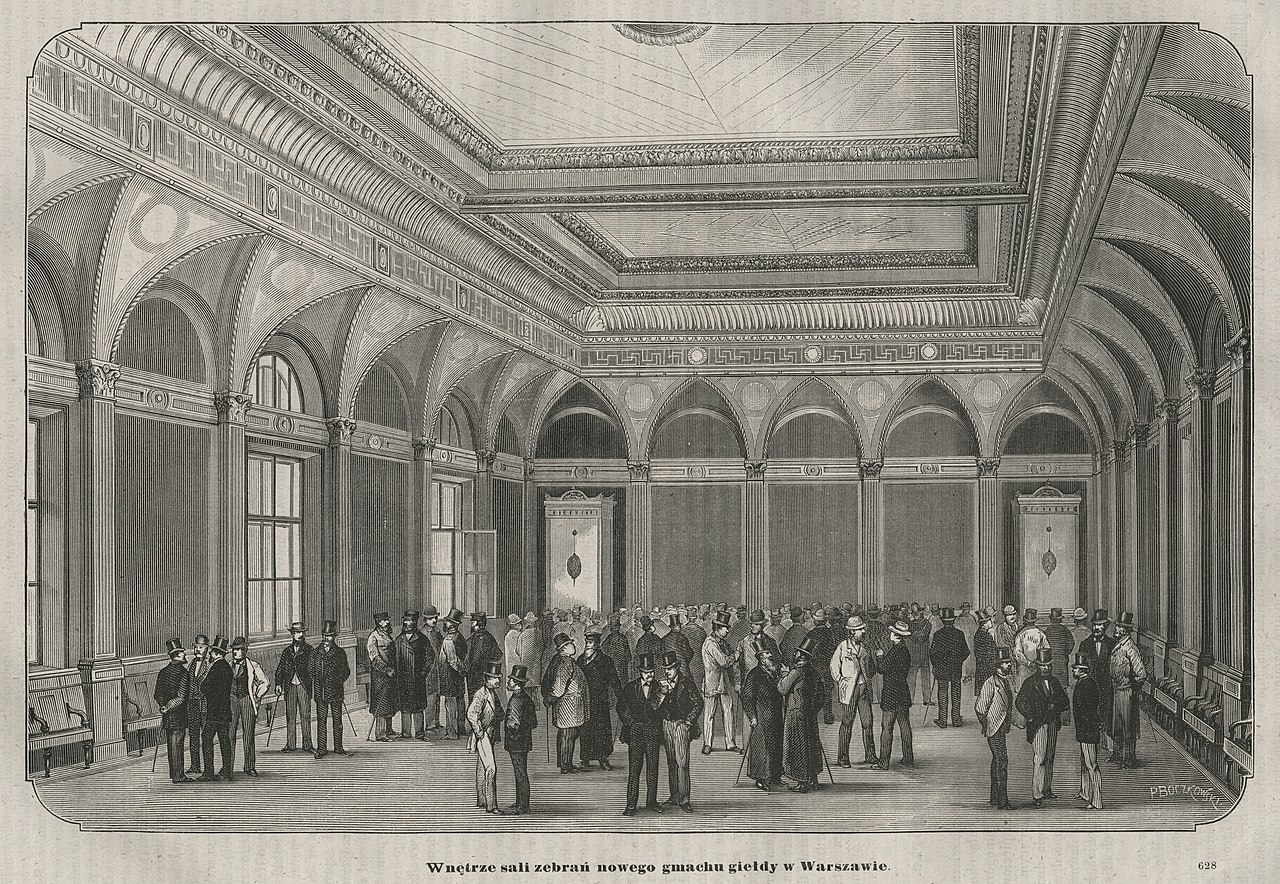
- Illustration: P. Boczkowski, hall of the new exchange building on Królewska Street, 1877. Tygodnik Illustrowany, Mazovian Digital Library. A later home, not Saxon Palace in 1817. Attribution: P. Boczkowski, engraver. Proportionally reduced thumbnail supplied by Wikimedia Commons. No additional cropping, retouching or colour changes to the file., Illustration record and provenance.
- Illustration rights (P. Boczkowski, exchange hall, 1877. Tygodnik Illustrowany, Mazovian Digital Library.): Public domain, PD-old/PDM according to the Commons/MBC record., Rights information.
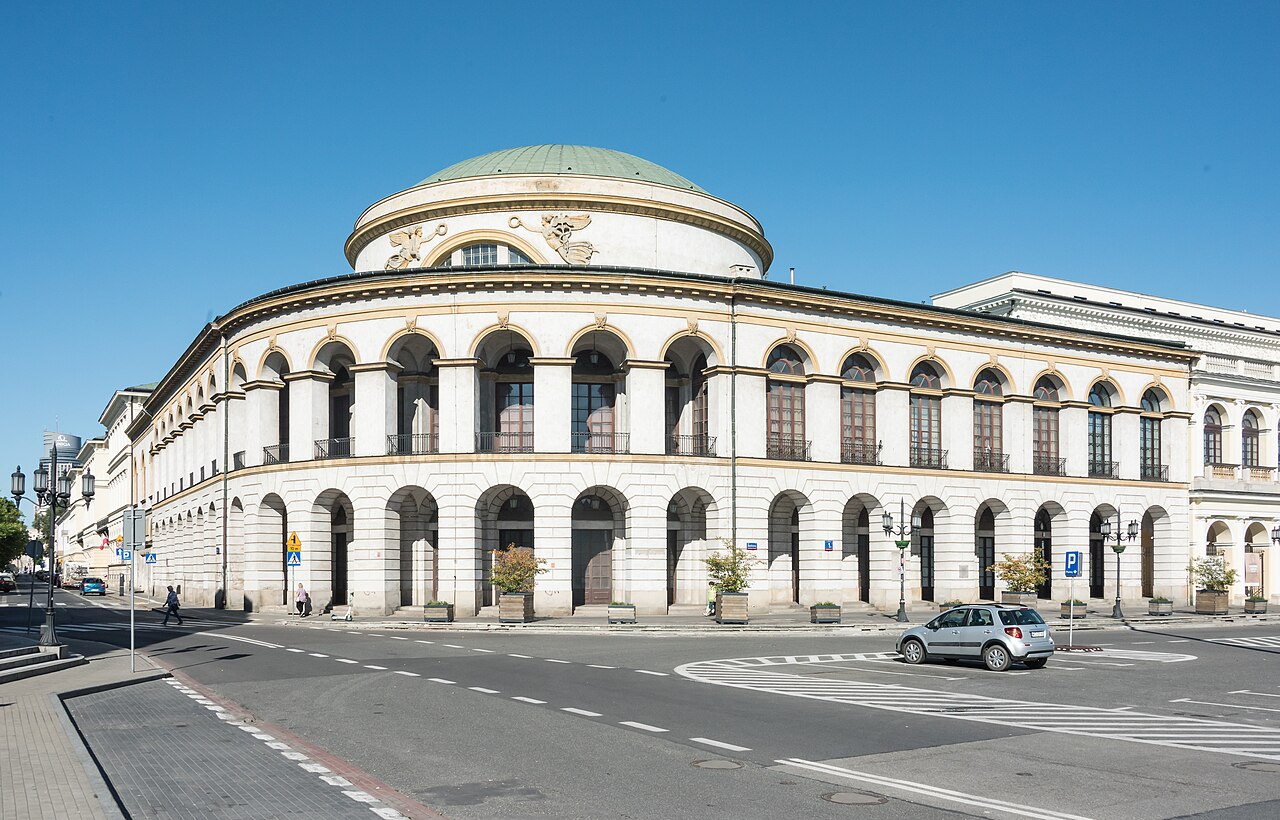
- Supplementary illustration: Photo: Adrian Grycuk; edited by Jacek Halicki, 2022. Context for the place, person or period, not a photograph of the event on the date in the title. Authorship and date: Adrian Grycuk; this version edited by Jacek Halicki; 2022-07-03. Provenance and restrictions: CC BY-SA 3.0 PL (terms), Illustration provenance.
- Illustration rights (Adrian Grycuk, edited by Jacek Halicki, 2022. CC BY-SA 3.0 PL, reduced.): CC BY-SA 3.0 PL., CC BY-SA 3.0 PL.
- This version of the photograph remains available under the stated CC BY-SA licence. Further use must retain the required attribution, information about changes and the requirement to share under the same or a compatible licence..
- Supplementary illustration: Official bill of exchange form. Context for the place, person or period, not a photograph of the event on the date in the title. Provenance and restrictions: official form; PD-Polishsymbol. Upload history goes back to 2006; we do not date the form using the filename., Illustration provenance.
- Ilustracje: Saxon Palace, unknown artist, around 1800; P. Boczkowski, exchange hall, 1877. Tygodnik Illustrowany, Mazovian Digital Library; Photo: Adrian Grycuk; edited by Jacek Halicki, 2022; Official bill of exchange form.
This article is historical and informational and does not constitute legal advice.